

Did you know that Liberace, the flamboyant pianist who debuted his Las Vegas residency in 1944, was once paid $50,000 per week at the Riviera Hotel and Casino, a sum equivalent to nearly $900,000 today, making him one of the highest-paid entertainers of his era? From those early days to the modern spectacles of Celine Dion, Britney Spears, and Adele, the Las Vegas residency has evolved from a niche gig to a prestigious, lucrative, and artistically fulfilling platform for music legends. No longer the “elephant graveyard” of fading stars, as Cher once quipped, residencies have become a coveted stage, drawing global superstars to perform in custom-built theaters for dedicated fans. This article traces the historical arc of the Vegas residency, from its pioneering roots with Liberace and Elvis Presley to its modern renaissance, exploring why it thrives and how it continues to cement Las Vegas as the world’s live music capital. For music history buffs, concert-goers, and fans of legendary artists, the story of the Vegas residency is a vibrant chapter in the city’s ever-evolving saga.
The Evolution of a Concept
The Las Vegas residency—a series of concerts performed at a single venue over an extended period—has been a cornerstone of the Strip’s identity for nearly eight decades. Defined by the Pollstar Awards as 10 or more shows at one location, residencies allow artists to “tour in place,” bringing fans to them rather than hitting the road. What began as a way to lure gamblers with live entertainment has transformed into a billion-dollar industry, with artists like Celine Dion grossing over $681 million across her two residencies. From the intimate lounges of the 1940s to the cutting-edge MSG Sphere in 2025, the residency model reflects Las Vegas’s knack for reinvention. As The National noted, “Celine Dion sparked the recent flurry of chart-toppers headlining extended showcases, though their roots stretch back to the ‘50s”. Today, residencies are a badge of honor, showcasing the city’s ability to blend nostalgia, innovation, and star power into a unique entertainment experience.
The Early Pioneers (1940s–1970s)
The Las Vegas residency was born in an era when the Strip was a playground for mobsters, gamblers, and showmen. Early pioneers like Liberace and Frank Sinatra set the stage for long-term engagements, proving that live music could be as big a draw as the slot machines.
Liberace and Frank Sinatra/Rat Pack
In 1944, a 25-year-old pianist named Liberace debuted at the Hotel Last Frontier’s Ramona Room, earning $750 a week. His flamboyant performances—blending classical music, pop tunes, and comedic banter—were a hit, prompting the entertainment director to rip up his contract and offer $1,500 a week, later raised to $2,000. By the 1950s, Liberace was commanding $50,000 a week at the Riviera Hotel and Casino, a figure that soared to $300,000 a week by 1972 at the Las Vegas Hilton, equivalent to $1.5 million today. Known as “Mr. Showmanship,” his extravagant costumes and charismatic stage presence made him a Vegas icon, drawing crowds beyond the casino floor and setting a precedent for residencies as a lucrative draw.
Frank Sinatra and the Rat Pack—Dean Martin, Sammy Davis Jr., Joey Bishop, and Peter Lawford—further defined the residency model in the 1950s and 1960s. Sinatra’s first Vegas gig in 1951 at the Desert Inn introduced a suave, sexy style, backed by a 70-piece orchestra. The Rat Pack’s shows at the Sands Hotel’s Copa Room were legendary for their improvisational humor, musical virtuosity, and star-studded camaraderie, attracting Hollywood elite and everyday tourists alike. As UNLV historian David Schwartz explained, “Entertainment was a way for casinos to differentiate themselves, especially in the ‘40s and ‘50s”. Sinatra’s 43-year Vegas tenure, blending crooner classics with Rat Pack charisma, made residencies synonymous with cool, laying the groundwork for future stars.

Elvis Presley
Elvis Presley’s residency at the International Hotel (later the Las Vegas Hilton) from 1969 to 1976 marked a seismic shift in Vegas entertainment. After years focused on films, the “King of Rock ‘n’ Roll” returned to live performance with a four-week stint in 1969, performing 636 sold-out shows over seven years. His high-energy concerts, featuring hits like “Suspicious Minds” and “Can’t Help Falling in Love,” drew 2.5 million fans and revitalized his career. Unlike his poorly received 1956 debut at the New Frontier, where a Newsweek critic likened him to “a jug of corn liquor at a champagne party”, Elvis’s 1969 residency captured a new audience, blending rock, soul, and spectacle.

Elvis’s impact was cultural as well as commercial. His residencies made Vegas a destination for younger, diverse crowds, and his legacy endures in the city’s iconography, from Elvis impersonators at wedding chapels to a bronze statue at the Westgate Hotel. By performing two shows a night, seven days a week, he set a grueling standard for resident performers, proving residencies could be a career-defining triumph rather than a last resort. As CNN noted, “The memory of the ‘King of Rock n’ Roll’ is so woven into the fabric of Las Vegas” that his influence remains indelible.
“The memory of the ‘King of Rock n’ Roll’ is so woven into the fabric of Las Vegas”
CNN
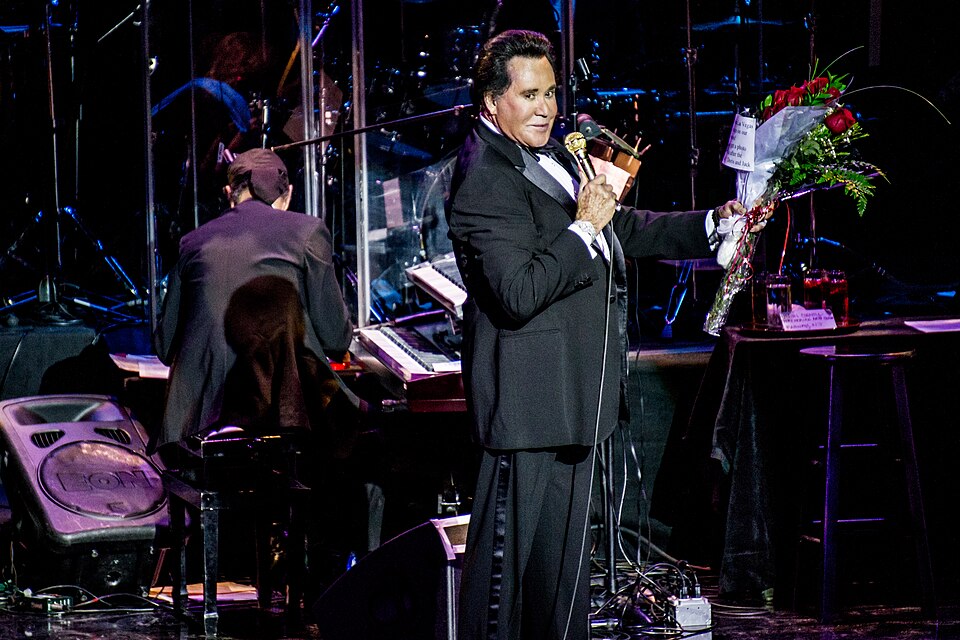
Mr Las Vegas – Wayne Newton
Transformational music legends like Wayne Newton brought the showmanship of Las Vegas performances in the 1960s. His shows were a masterclass in versatility: he sang, danced, played multiple instruments, told jokes, and engaged audiences with a warmth that felt personal, even in packed showrooms. Critics noted his ability to make every guest feel like the only one in the room, a skill honed through years of relentless performing. Las Vegas residency for musical talent required a complete production.
The Modern Era (1990s–Present)
By the late 1970s, Vegas residencies had gained a reputation as a retirement home for fading stars, with Cher famously calling it an “elephant graveyard where talent goes to die”. The 1990s and 2000s changed that perception, thanks to a new wave of artists and visionary productions that redefined the residency as a prestigious platform.
Celine Dion’s Renaissance
Celine Dion’s A New Day… residency, launched in 2003 at the custom-built Colosseum at Caesars Palace, was a game-changer. Grossing $385.1 million and drawing nearly three million fans across 717 shows from 2003 to 2007, it remains the highest-grossing residency in history. Conceived by Dion’s late husband, René Angélil, and directed by Cirque du Soleil’s Franco Dragone, the show fused theatrical visuals, special effects, and Dion’s powerhouse vocals, setting a new standard for production values. The $95 million Colosseum, designed specifically for Dion, marked a shift toward purpose-built venues, enhancing the spectacle.

Dion’s success shattered the stigma of residencies as a career endpoint. As Kurt Melien of Live Nation Las Vegas told Vice, “Céline was a pioneer without question… She changed the face of modern Vegas”. Her second residency, Celine (2011–2019), grossed $296 million over 427 shows, making her the highest-grossing resident performer ever. Dubbed the “Queen of Las Vegas,” Dion attracted younger audiences and inspired a wave of contemporary stars, with Billboard crediting her for “pioneering the modern residency”. Her emotional performances, including a 1,000th show in 2016 dedicated to Angélil, cemented her legacy. As an X post declared, “Celine Dion ran with her Las Vegas residencies, so that singers like Adele and others could walk”.
“Céline was a pioneer without question… She changed the face of modern Vegas”
Kurt Melien, Live Nation
Pop and Rock Take Over
Dion’s success opened the door for pop and rock stars to embrace residencies, bringing younger demographics to the Strip. Elton John’s The Red Piano (2004–2009) and Million Dollar Piano (2011–2018) at the Colosseum grossed $169 million and $131 million, respectively, with nearly two million tickets sold. His custom Yamaha piano with LED lights synchronized to visuals added a high-tech flair. Britney Spears’s Piece of Me (2013–2017) at Planet Hollywood’s Axis Theater, grossing $137.7 million over 250 shows, was a watershed moment. As Forbes noted, Spears “popularized Las Vegas residencies” by proving pop stars in their prime could thrive, drawing younger fans and paving the way for artists like Katy Perry and Lady Gaga.
Usher’s 2021–2023 residency at the Colosseum and Park Theater, with 100 shows grossing over $110 million, revitalized his career, leading to his 2024 Super Bowl halftime performance. An X post praised him for changing the residency stereotype, noting, “Before it was ‘washed up’ acts… Now it’s appreciation for artists that have paid their dues”. Adele’s Weekends with Adele at the Colosseum, launched in 2022, is projected to rank among the highest-grossing residencies, with 60 shows generating $244.5 million by 2024. Her reported $2 million per show underscores the financial allure. Other stars, from Mariah Carey’s Christmas-themed residencies to Jennifer Lopez’s All I Have (2016–2018, $101 million), have followed suit, diversifying the Strip’s offerings.
The 2020s brought new genres, with EDM DJs like Tiesto, rock bands like Aerosmith, and hip-hop acts like Drake embracing residencies. U2’s 2023–2024 U2:UV Achtung Baby at the MSG Sphere, the Strip’s newest venue, pushed boundaries with its immersive visuals, proving residencies could be as innovative as global tours. As Las Vegas Weekly noted, “What followed Britney was… a wider span of genres that would mirror the changing demographic of Las Vegas”.
“What followed Britney was… a wider span of genres that would mirror the changing demographic of Las Vegas”
Las Vegas Weekly
Why Residencies Thrive in Vegas
The Las Vegas residency model thrives due to its unique benefits for artists, audiences, and the city itself, creating a perfect storm of entertainment and commerce.
Consistent Income/Less Travel
For artists, residencies offer financial stability without the grind of touring. Unlike traditional tours requiring travel across continents, residencies allow performers to stay in one place, often with perks like luxury accommodations, 24-hour security, and spa access. Adele’s $2 million per show and Dion’s record-breaking earnings highlight the lucrative potential. As Grammys producer Ken Ehrlich noted, “Acts are reacting to the rigors of the road, the uncertainty of fickle audiences, and the advantages of being in one place”. This stability, paired with the ability to focus on family—as Dion did after her son’s birth in 2001—makes residencies appealing.
High-Quality Production
Las Vegas’s investment in state-of-the-art venues elevates residencies to theatrical spectacles. The Colosseum at Caesars Palace, built for Dion, and the MSG Sphere, with its 16K-resolution wraparound LED screen, offer unmatched production capabilities. Artists like Elton John and U2 have leveraged custom technology, from LED pianos to immersive visuals, to create unforgettable shows. John Nelson of AEG Presents Las Vegas explained, “These new theaters held four or five times more people than had the theaters at the Frontier or at the Sands,” necessitating grander productions. This access to cutting-edge staging allows artists to push creative boundaries without the logistical challenges of touring.
Dedicated Fan Base
Residencies attract a global fan base willing to travel to Vegas, a city that welcomed 37 million tourists in 1999 alone. Unlike tours, where artists chase audiences, residencies bring fans to them, creating a pilgrimage-like experience. Dion’s five million fans across her residencies and Spears’s younger demographic illustrate this draw. Social media has amplified this, with viral moments from Usher’s shows sparking TikTok trends and boosting ticket sales. As Mefeater noted, “Younger crowds visiting Las Vegas more” have fueled demand for contemporary artists, ensuring packed houses.

Future of Residencies
The future of Vegas residencies is bright, with new venues and formats pushing the envelope. The MSG Sphere, opened in 2023, has redefined immersive entertainment with acts like U2 and The Eagles, whose 2025 residency leverages the venue’s high-tech visuals. Emerging residencies, like Janet Jackson’s at Resorts World and The Backstreet Boys’ Larger Than Life at the Sphere in 2025, Bruno Mars, reflect a broadening demographic, from pop to rock to country. Dolly Parton’s announced 2025 residency, her first in over three decades, signals the model’s enduring appeal. As Billboard’s 2025 residency list shows, artists like Carrie Underwood, Maroon 5, and Dead & Company continue to diversify the scene.
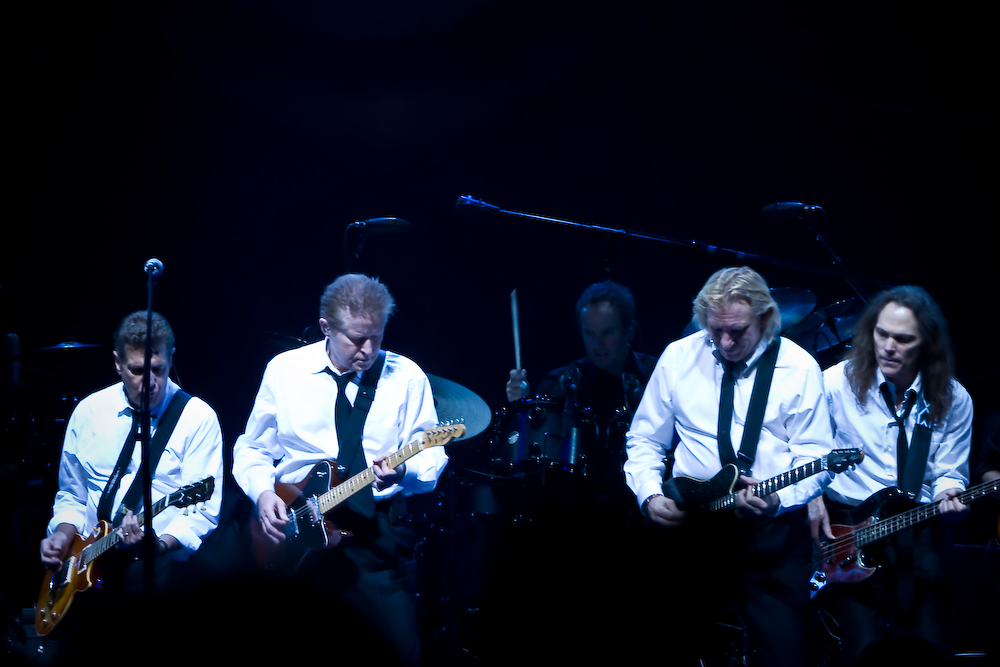
Evolving formats, like Lady Gaga’s dual Enigma and Jazz & Piano residencies, blend pop spectacle with intimate performances, catering to varied tastes. The rise of non-traditional acts, such as EDM and hip-hop, and shorter residencies—like Janet Jackson’s two-month stint—suggest flexibility in the model. As casinos like MGM and Caesars Entertainment invest in AI and VR to enhance experiences, residencies may become even more immersive. The Sphere’s potential for virtual concerts could redefine the format, blending live and digital realms.
Conclusion
The Las Vegas residency is a testament to the city’s innovative spirit and its unwavering commitment to being the world’s premier live entertainment destination. From Liberace’s sequined spectacles in the 1940s to Elvis’s rock ‘n’ roll revival in the 1960s, Celine Dion’s game-changing A New Day… in the 2000s, and the modern pop and rock invasions of Britney Spears, Usher, and Adele, residencies have evolved from a casino sideshow to a cultural juggernaut. They offer artists consistent income, access to cutting-edge production, and a global fan base, while cementing Vegas’s identity as a music mecca. As new venues like the Sphere push technological boundaries and diverse acts continue to sign on, the residency remains a vibrant canvas for creativity. For music history buffs and concert-goers, a Vegas residency is more than a show—it’s a pilgrimage to the heart of live entertainment, where legends are born and the magic of Sin City shines brighter than ever.


